The Phomemo P12 combines everyday adhesive labeling with thermal transfer ribbon options, making it an interesting fit for organizing supplies and adding labels to crafts or gifts.
This phomemo ribbon printer review looks at the formats, app tools, and power choices that shape its appeal.
Phomemo P12 Review Summary
The quick verdict
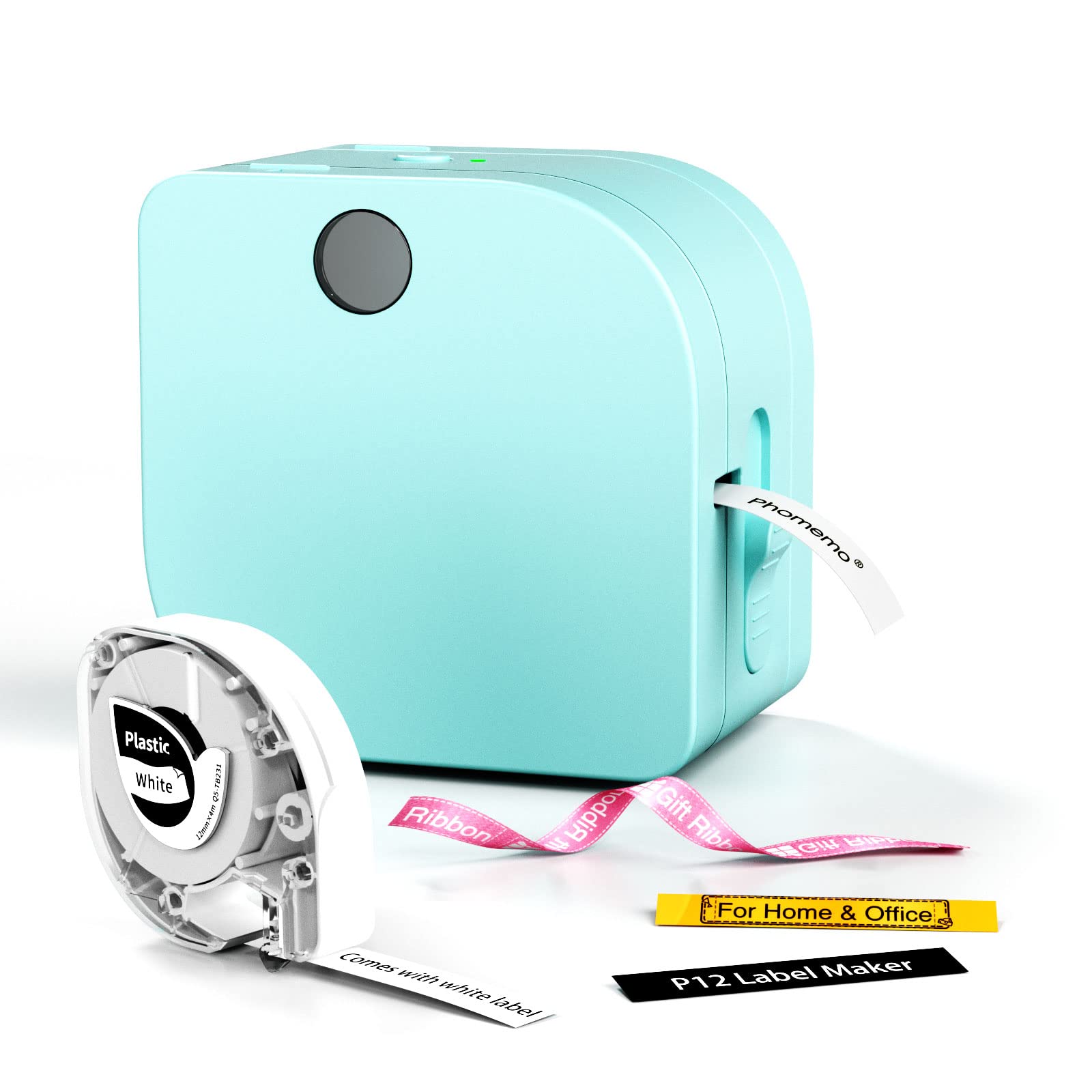
2,000+ ratings
Read Amazon ReviewsPhomemo P12
A phone-connected label maker for home, school, and craft users who want flexible paper and ribbon label options.
- Supports thermal labels and thermal transfer materials, with options including thermal paper, iron-on labels, and ribbons.
- Prints at 203 DPI and uses no ink or toner; the description also notes BPA-free labels.
- Works with iOS and Android phones through a Bluetooth-connected app.
- App tools include 15 or more languages, 90 or more fonts, and 1,000 or more borders and symbols.

Pros
- Supports both everyday thermal labels and more specialized thermal transfer materials.
- A broad selection of app fonts, borders, symbols, and languages makes custom labels possible.
Consider before buying
- Six AAA batteries are not included, so portable use requires a separate battery purchase.
- The described app connection is Bluetooth through a phone; buyers who need a computer-based workflow should confirm compatibility before choosing it.
Read the full review summary
The P12 is designed to cover more than basic pantry and folder labels.
It supports thermal labels as well as thermal transfer materials, including iron-on labels and ribbons, so one compact printer can serve routine organizing and decorative projects.
The included cutter and app-based design tools add flexibility for people who create labels from a phone.
Its strongest fit is a household, classroom, or craft space where labels vary by purpose: ordinary labels for containers and paperwork, and more specialized materials for clothing, gifts, or other projects.
The tradeoff is that users need to choose suitable media for each job and plan around USB-C power or six AAA batteries; those batteries are not included.
The buying factors
Phomemo P12 Scorecard
Editorial scores reflect listed features and buyer fit; they are not laboratory measurements or customer ratings.
Media versatility
It supports thermal labels and thermal transfer materials, including iron-on labels and ribbons.
App design options
The companion app supports multiple languages, fonts, borders, and symbols for customized layouts.
Everyday organization fit
Its suggested uses span kitchens, storage, school supplies, offices, gardens, and personal items.
Creative labeling fit
Ribbon options and label templates suit gift wrapping, party decorations, and other craft projects.
Power flexibility
USB-C operation or six AAA batteries offer a choice between plugged-in use and portability.
Setup convenience
Bluetooth printing from iOS or Android and a built-in cutter support phone-based label making.
Key Features and Specifications of Phomemo P12
- Supports thermal labels and thermal transfer materials, with options including thermal paper, iron-on labels, and ribbons.
- Prints at 203 DPI and uses no ink or toner; the description also notes BPA-free labels.
- Works with iOS and Android phones through a Bluetooth-connected app.
- App tools include 15 or more languages, 90 or more fonts, and 1,000 or more borders and symbols.
- Supports text, barcode creation, Excel import, scanning, OCR, and voice recognition.
- Has a built-in cutter and supports continuous printing; the listed minimum margin is 2 mm.
- Can run from an included USB-C cable connected to an outlet or from six AAA batteries, which are sold separately.
Pros and Cons of Phomemo P12
Pros
- Supports both everyday thermal labels and more specialized thermal transfer materials.
- A broad selection of app fonts, borders, symbols, and languages makes custom labels possible.
- Barcode, Excel import, OCR, scanning, and voice recognition expand its use beyond simple text labels.
- USB-C and AAA battery power provide options for a stationary workspace or use away from an outlet.
- The built-in cutter helps finish labels directly at the printer.
Consider before buying
- Six AAA batteries are not included, so portable use requires a separate battery purchase.
- The described app connection is Bluetooth through a phone; buyers who need a computer-based workflow should confirm compatibility before choosing it.
- The range of label materials means buyers should select the right media for each task, particularly when they need iron-on or ribbon output.
Who Should Buy Phomemo P12?
Good fit
Consider the P12 if your labeling routine crosses between home organization and creative projects.
You can use ordinary thermal labels for containers, dates, folders, reminders, and school supplies, then switch to transfer materials for applications such as iron-on labels or ribbon decoration.
That breadth is the key reason to consider it over a label maker aimed only at standard stickers.
It also makes sense for users who prefer designing labels on a phone. The app offers a large set of layout elements and includes practical tools such as barcode creation, Excel import, OCR, scanning, and voice recognition.
For a shared home or classroom workspace, those options can make repeated or customized labeling more convenient.
Before buying, decide how you expect to power it and which materials you will use most.
USB-C suits a place near an outlet, while AAA batteries make it easier to carry; check that the media you need is available for your specific projects.
Who should skip it
Skip it if your main need is a computer-connected desktop shipping-label workflow.
The P12 is described around phone app use and smaller organization or craft tasks, so confirm that its intended setup and label materials match your requirements first.
It may also be more than you need if you only print occasional plain labels and have no use for ribbon, iron-on materials, or the app's design features.
A simpler label maker could be a better match for that narrower routine.
How the Phomemo P12 Ribbon Printer Fits Different Labeling Jobs
Two kinds of labeling in one device
The defining idea is combining thermal label printing with thermal transfer options. That lets the P12 address both familiar organization tasks and more specialized projects such as clothing labels or ribbon decoration.
Buyers should treat media choice as part of the workflow: a material suited to a jar or folder may not be the one they want for an iron-on or decorative application.
Phone-based customization
The app provides substantial room to personalize a label, with support for multiple languages, fonts, borders, and symbols.
Barcode creation and Excel import are useful when labels need structured information, while OCR and voice recognition offer other ways to bring content into a design.
These tools are most relevant to users who expect to make varied labels rather than print the same simple text every time.
A broad set of possible uses
The described use cases range from food date markers, cosmetics, seasonings, storage, and garden items to documents, price tags, notebooks, and classroom supplies.
The ribbon and craft examples extend the same device into gift wrapping, party decorations, flowers, greeting cards, and handmade projects. That makes the P12 most compelling where one workspace serves several labeling needs.
Power and finishing choices
USB-C operation is convenient for a regular station near an outlet, while six AAA batteries support carrying the printer to another location. Since the batteries are not included, portable buyers should account for that extra step.
A built-in cutter and continuous printing support a more direct printing-to-finishing process when preparing multiple labels.
Alternatives to Phomemo P12
Battery-focused alternative
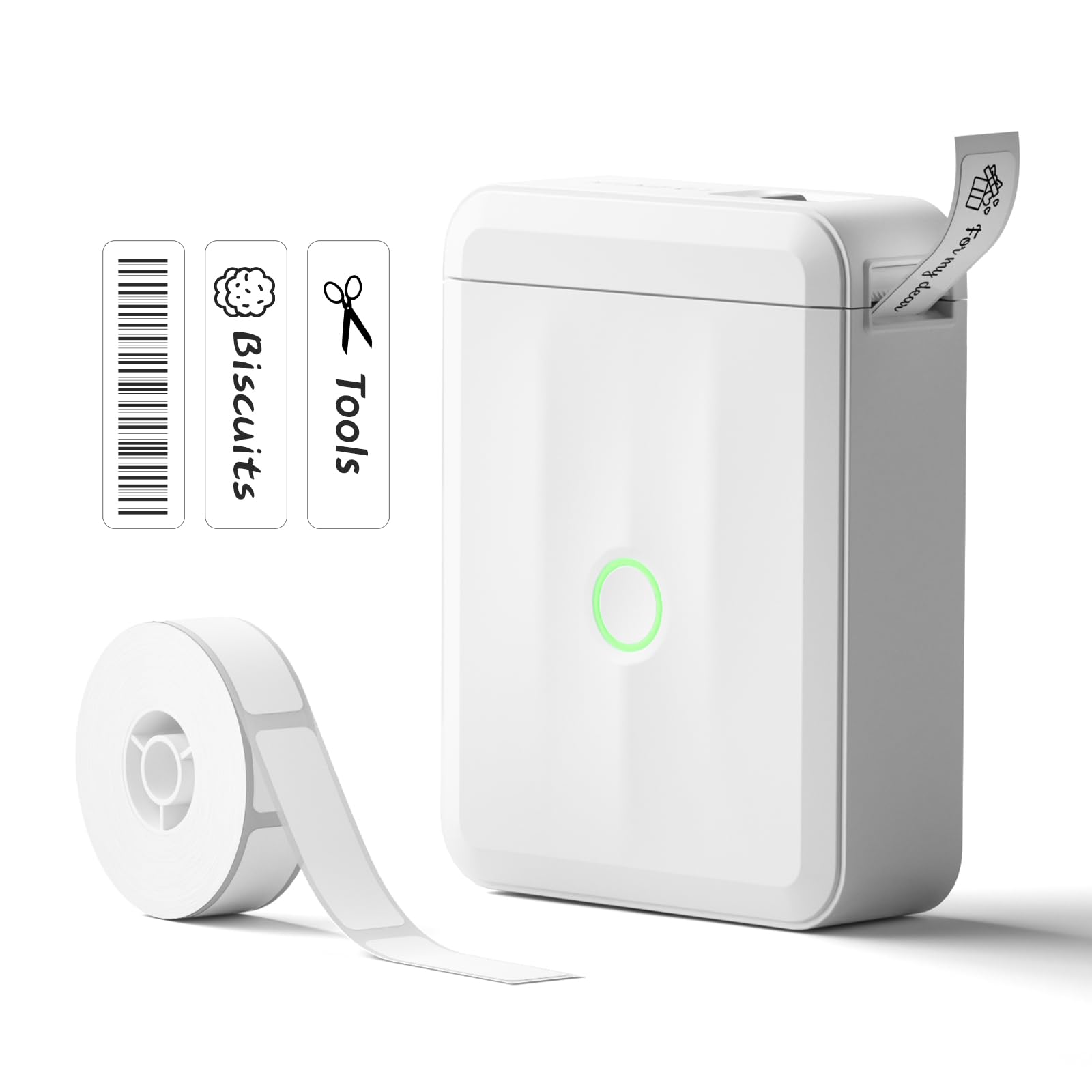
14,000+ ratings
Read Amazon ReviewsNIIMBOT D110
Choose the P12 if ribbon or iron-on materials and the broader craft use cases are central to your plans. The D110 may suit buyers who prioritize a rechargeable portable label maker for everyday organization and batch printing.
- The NIIMBOT D110 is a Bluetooth thermal label maker for phones, with a rechargeable battery, batch printing, and automatic recognition for different label types.
- Its output is monochrome, and its description centers on home, school, and small-business organization.
- The Phomemo P12 supports both thermal labels and thermal transfer materials, with app-based tools for designs and craft-oriented uses.
Battery-focused alternative
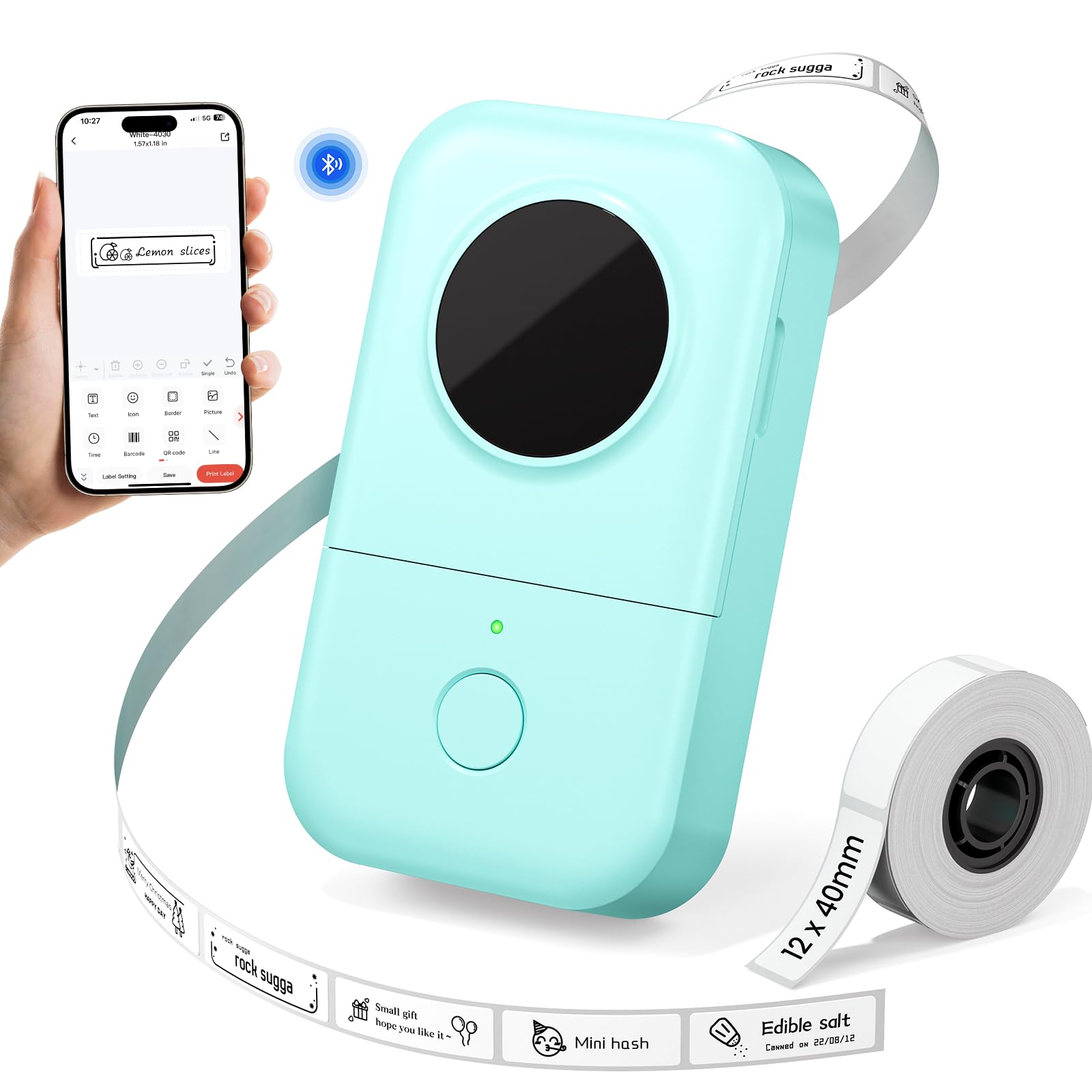
1,000+ ratings
Read Amazon ReviewsPhomemo D30
Pick the P12 for the described ribbon and transfer-material options. The D30 is a reasonable alternative for buyers who mainly want decorative or organizational adhesive tape labels and prefer rechargeable operation.
- The Phomemo D30 focuses on adhesive label tapes and phone-based designs, with several tape widths and an app offering fonts, symbols, frames, and borders.
- Its listed power source is a rechargeable battery.
- The P12 offers thermal transfer materials, including ribbons and iron-on labels, alongside standard thermal labels.
Is Phomemo P12 Worth It?
The Phomemo P12 is worth considering if you want one phone-connected label maker for routine organization and creative work.
Its support for thermal labels, transfer materials, ribbons, and a feature-rich app gives it a wider range of uses than a basic text-label workflow.
Its appeal depends on making use of that flexibility. Choose the power method and compatible media that fit your routine, and account for the separately purchased AAA batteries if you want portable operation.
For buyers who need only occasional plain labels, a more focused model may be a better fit.
Your review at a glance
2,000+ ratings
Read Amazon ReviewsPhomemo P12
A phone-connected label maker for home, school, and craft users who want flexible paper and ribbon label options.
- Supports thermal labels and thermal transfer materials, with options including thermal paper, iron-on labels, and ribbons.
- Prints at 203 DPI and uses no ink or toner; the description also notes BPA-free labels.
- Works with iOS and Android phones through a Bluetooth-connected app.
- App tools include 15 or more languages, 90 or more fonts, and 1,000 or more borders and symbols.